KIB-UDZ / ADAPT
AI-accelerated urban climate simulation for digital twins
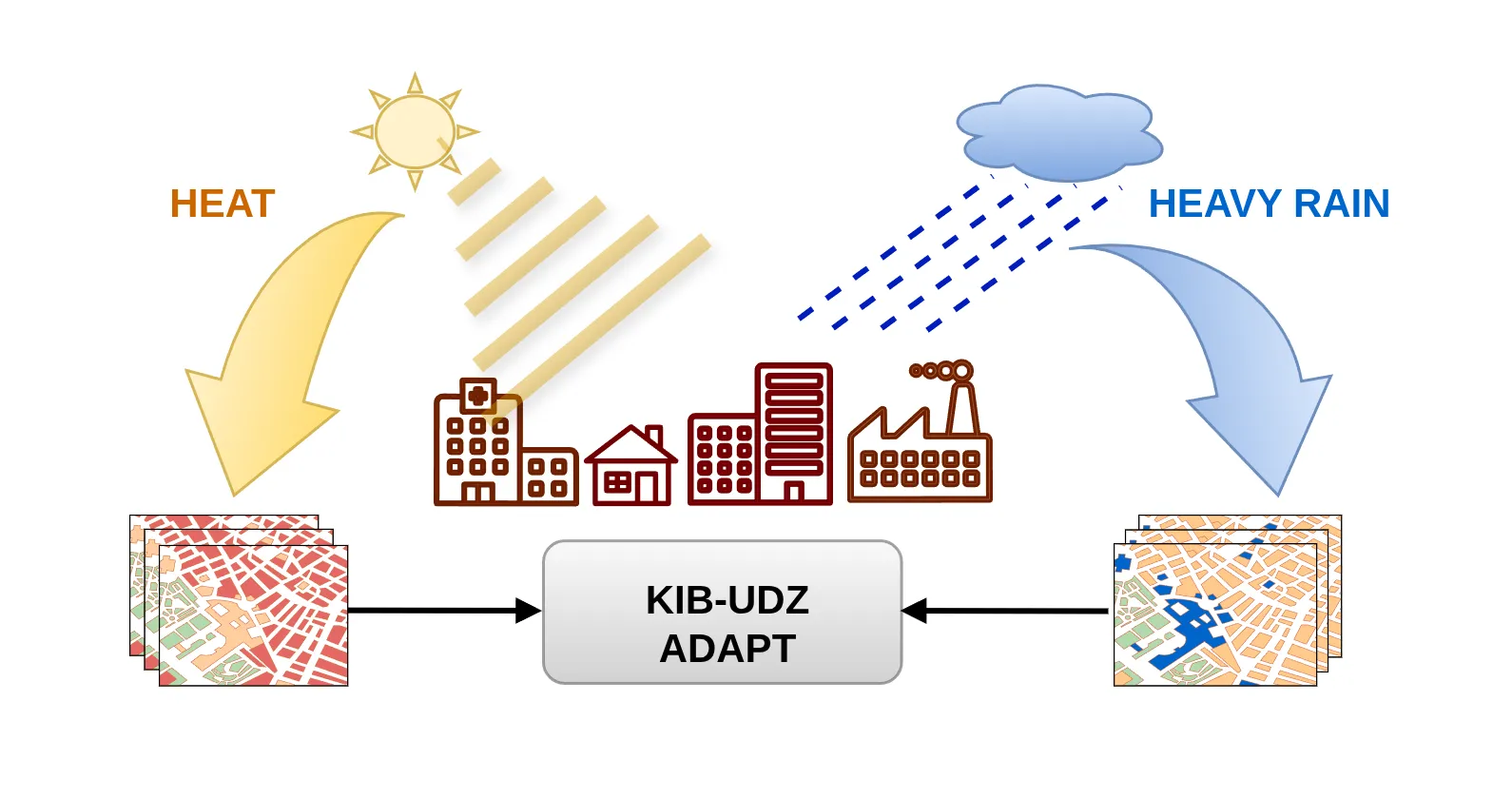
KIB-UDZ (“Planungsbeschleunigung: Entwicklung eines KI-beschleunigten Tools zur Bewertung von Starkniederschlags- und Hitzeanpassungsmaßnahmen in Urbanen Digitalen Zwillingen”) develops ADAPT, a user-oriented, AI-based software for municipalities to create a foundation for science-based decisions in preventive climate adaptation and disaster prevention.
The project is funded by the German Space Agency at DLR with funds from the Federal Ministry of Research, Technology and Space (BMFTR), runs from December 2025 to December 2029 (48 months), and was selected as one of six funded projects from over 100 submitted proposals in a competitive review process.
Why ADAPT
Powerful tools for urban climate simulation already exist — most notably the microscale urban climate model PALM-4U, developed under the BMBF funding measure “Stadtklima im Wandel”. However, due to their complexity and high computational demands, these approaches remain impractical for many municipalities.
ADAPT closes this gap by combining physically accurate methods with efficient AI techniques and linking them to urban digital twins (UDZ). This makes it possible to simulate, visualise and evaluate planning variants against expected regional heat and heavy-rainfall events within seconds instead of hours — while conserving both computing and time resources.
What we do
- Simulate and compare large numbers of planning scenarios for heat and heavy-rain adaptation in near real time
- Provide special indicators and evaluation metrics in an analysis interface that helps users evaluate and compare scenarios side by side
- Build on a freely accessible, platform-independent data and software infrastructure that can be integrated into existing urban digital twins
- Base simulations on PALM-4U urban climate simulations as well as heavy-rain and flood simulations
The goal is to fundamentally improve the understanding and acceptance of adaptation measures and to support decision-makers in implementing evidence-based climate policy — enabling not only large, but also medium and small municipalities to engage in evidence-based climate adaptation.
Consortium
- Deutscher Wetterdienst (DWD) — coordinator
- Stadt Speyer — municipal practice partner
- Deutsches Forschungszentrum für Künstliche Intelligenz (DFKI) — AI research
- Pecanode GmbH / PALM4U — urban climate modelling
- Technische Universität München (TUM) — water engineering
Further information
Project team

Marcela Charfuelan
Sr. Researcher

Dinesh Krishna Natarajan
PhD Student Researcher